24 June 2026
8.15 am. The resort is slowly coming to life. You board the Violettes cable cars, then transfer to the Funitel. Within minutes, the scenery changes dramatically.
At nearly 3,000 metres, the Plaine Morte stretches before you, rugged and silent. The air is crisper, the light harsher. You adjust your helmet, take one last look at the glacier… and you set off.
A demanding warm-up
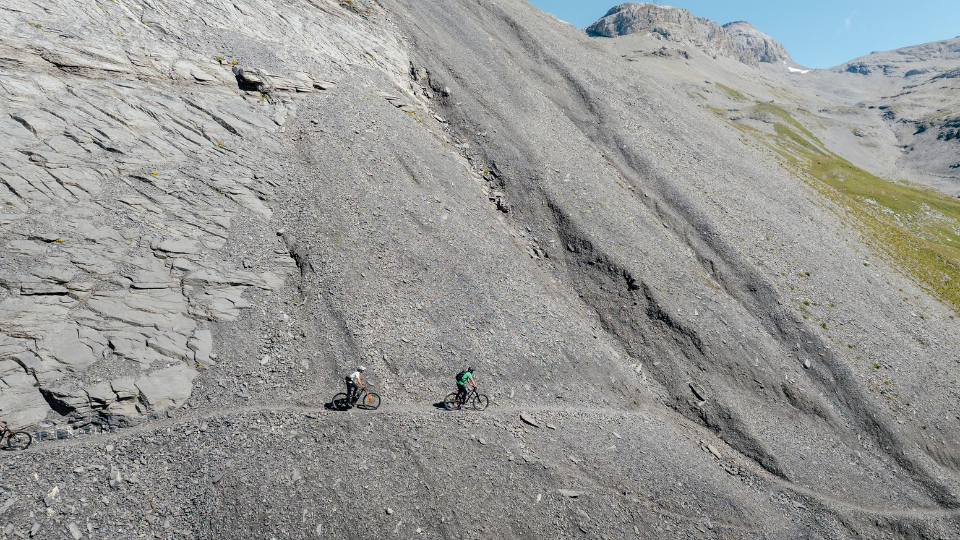
From the very first few metres, the terrain sets the tone. Technical, rocky and at times unstable, it demands precision and commitment.
The route skirts around Lake Huiton, crosses the Col des Gendarmes, then climbs back up towards the Col du Pochet. A sequence that breaks the rhythm and reminds you that you’re in the high mountains.
A descent that really gets going
Before plunging down to the rest of the route, the Cabane des Violettes offers a welcome stop to catch your breath for a moment and recharge your batteries. After a final climb towards the Petit Bonvin, the descent really comes into its own.
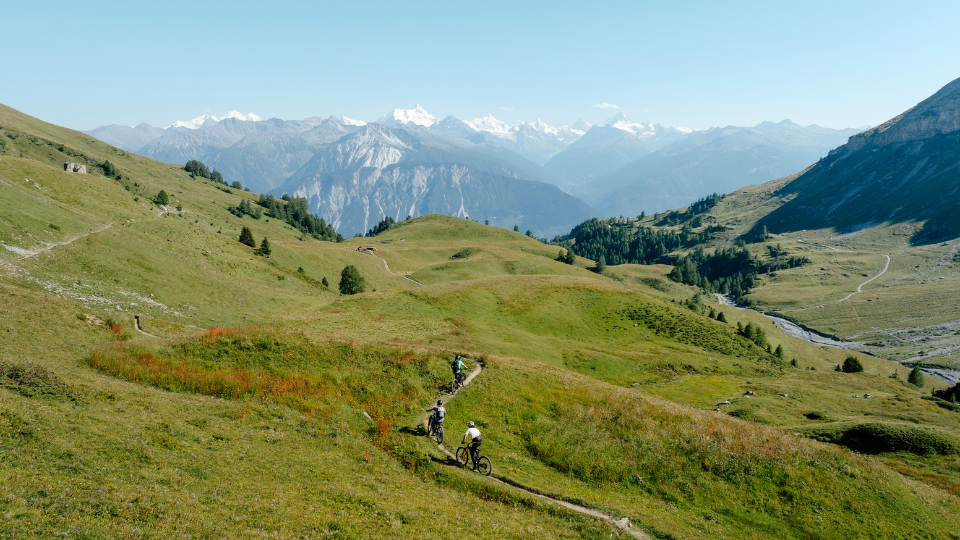
The Tièche valley gradually opens up: waterfalls, cliffs, forests. The terrain becomes more flowing, though never easy. With roots, rocks and tight bends, concentration remains essential.
The route then continues towards Cordona, Venthône and finally Sierre, the end point of a route which, in total, covers a descent of nearly 3,000 metres.
A route with many facets
In just a few hours, the route takes you through a variety of contrasting landscapes. You leave behind the rocky, glacial terrain of the Plaine Morte to reach the mountain pastures and open valleys, then the denser forests, before arriving in the Rhone Valley. This natural progression is what gives the route its real appeal.
A simple and efficient return journey
Once you arrive in Sierre, the return journey is easy thanks to the Sierre–Crans-Montana funicular, which allows you to transport your bike.
A real bonus after a long descent: you can travel back up to the resort in comfort, without having to pedal up.
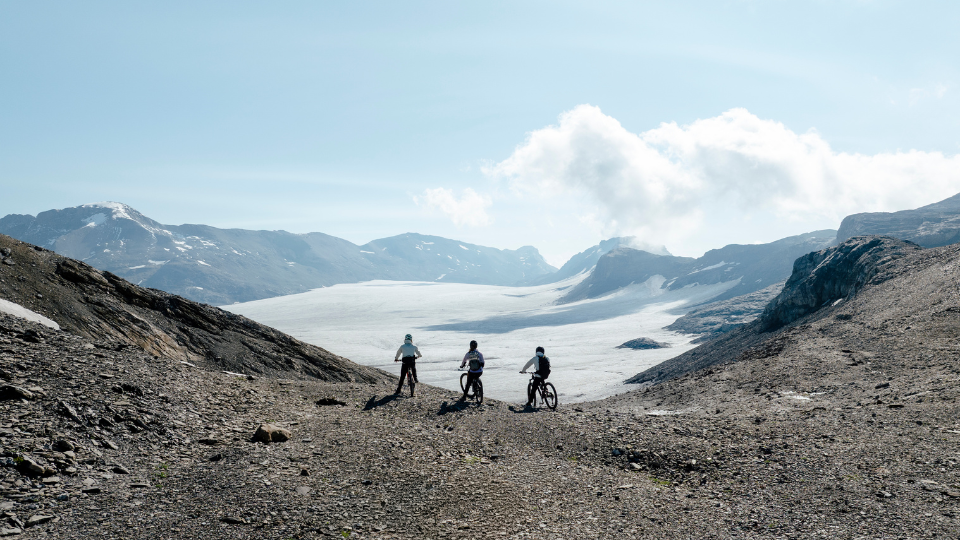
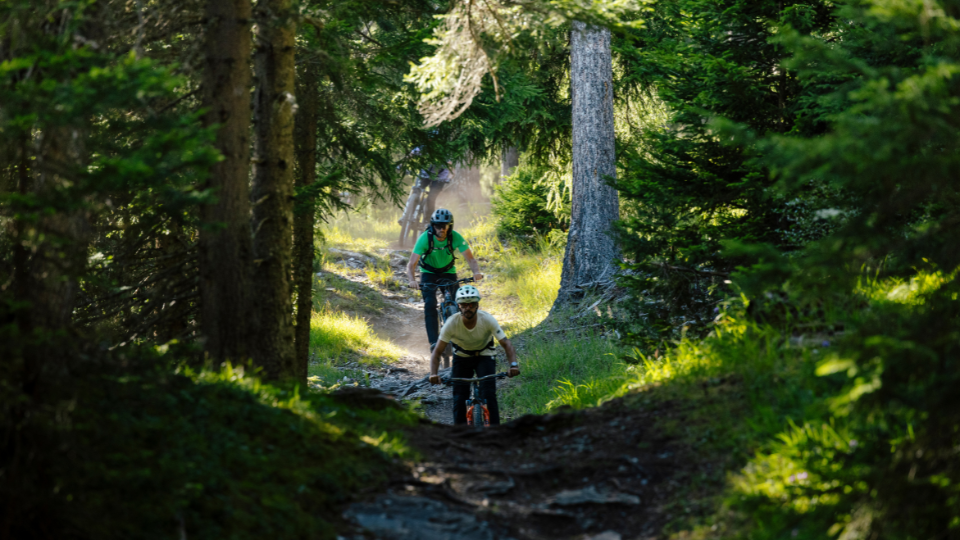
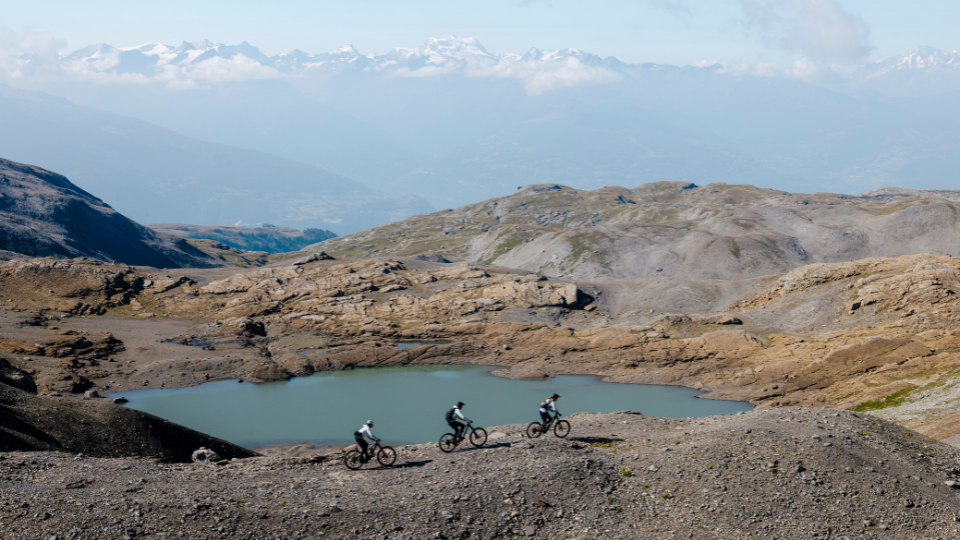
Some sections, used in the Enduro World Series, confirm the challenging nature of the route.
On a high-altitude route like Plaine Morte Bike, both experience and respect for the terrain is required. Staying on the marked trails, adjusting your speed, closing gates, respecting other users and avoiding any intrusion into sensitive areas helps to preserve what makes the route so special: a living, fragile and shared mountain. Every rider has a part to play here in looking after the trail for those who come after.
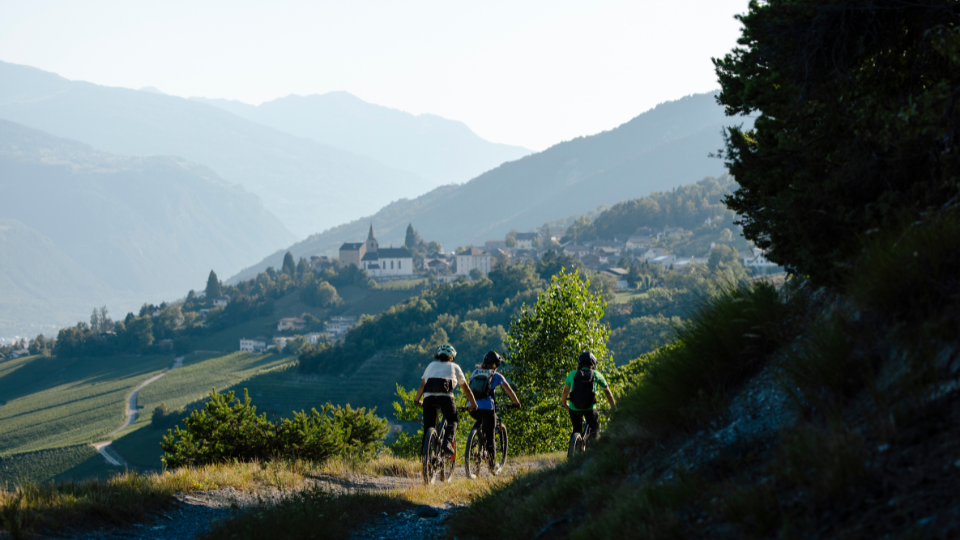
Plaine Morte Bike is a major route that needs to be prepared for as much as you enjoy it. Before setting off, there are a few things worth checking to ensure you get the most out of the experience.
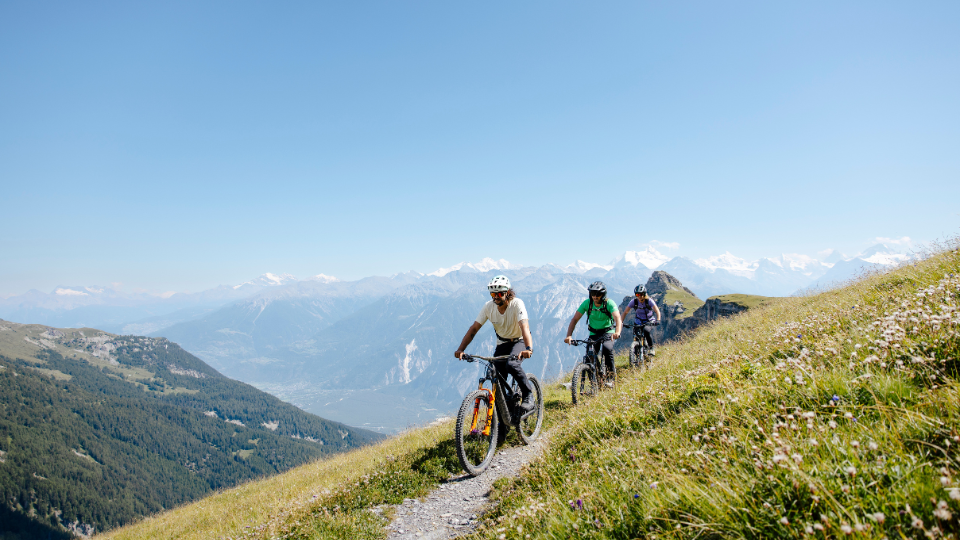
Plaine Morte Bike is much more than a line on a map: it is an Alpine traverse in all its glory. Starting from the rugged landscapes of Plaine Morte, skirting the glacier’s rocky terrain, then gradually descending through mountain pastures, forests and into the Rhone Valley.
A demanding, comprehensive and at times challenging route that requires skill as much as it offers thrills.
By the finish, your legs will feel the almost 3,000 metres of descent. But what remains above all is the intensity of a rare ride: a true Alpine signature, tailor-made for riders in search of grandeur.


.png&vi_l=800&vi_h=600)