



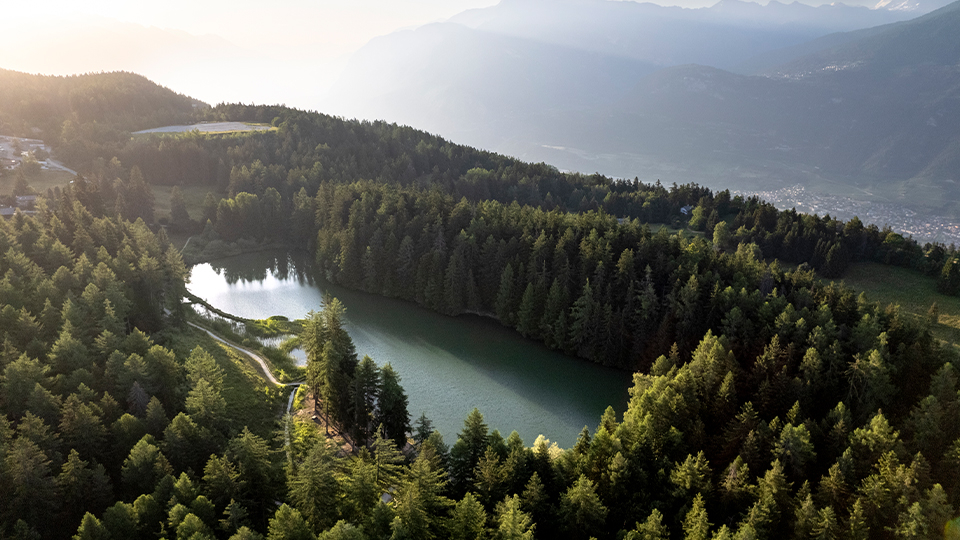
This season, you might find yourself strolling near Lake Miriouges, unaware that this lake, created in 1946 for irrigation, has become an exceptional sanctuary for Alpine biodiversity. The municipalities of Crans-Montana and Lens have carried out ingenious restoration work to transform this site into a veritable living laboratory. By carefully clearing the fir trees that were hindering biodiversity, they have created flower-filled meadows – veritable larders for insects – as well as shallow pools, specially designed to allow amphibians to breed in complete safety, far from predatory fish in the main lake.
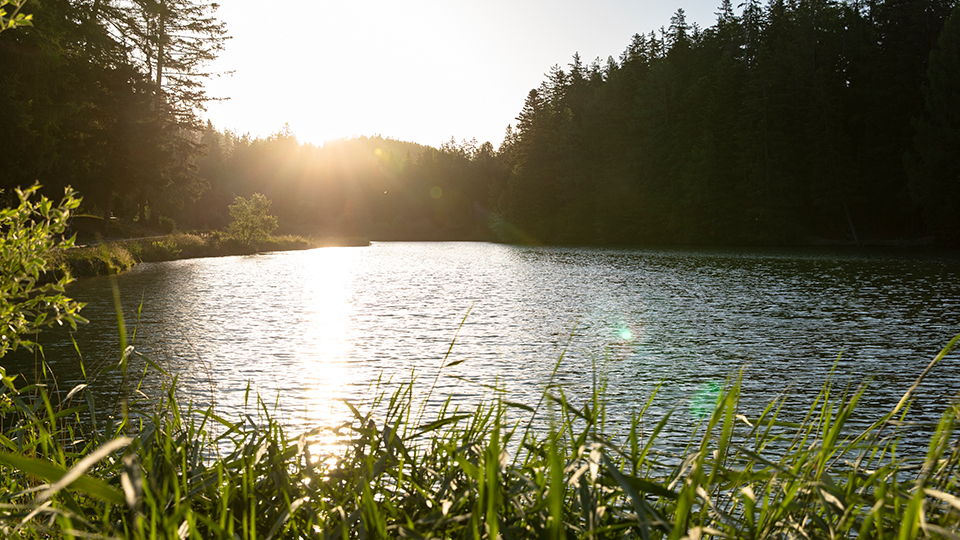
If you look closely at the banks and the water’s surface, you’ll discover a surprising array of wildlife that often escapes the distracted observer. You’ll come across the common frog, capable of living at altitudes of over 2,800 metres, and the curious swimmer, the ‘water bee’ which swims on its back with its legs transformed into paddles. The dragonflies also put on a show, drawn by the abundance of insects, and by migratory birds such as the little bittern or the common sandpiper which stop here to rest. As for the vegetation, meadowsweet, with its enchanting scent, attracts Brenthis ino butterflies, whilst Potamogaton pond weed serves as a resting platform for dragonflies.
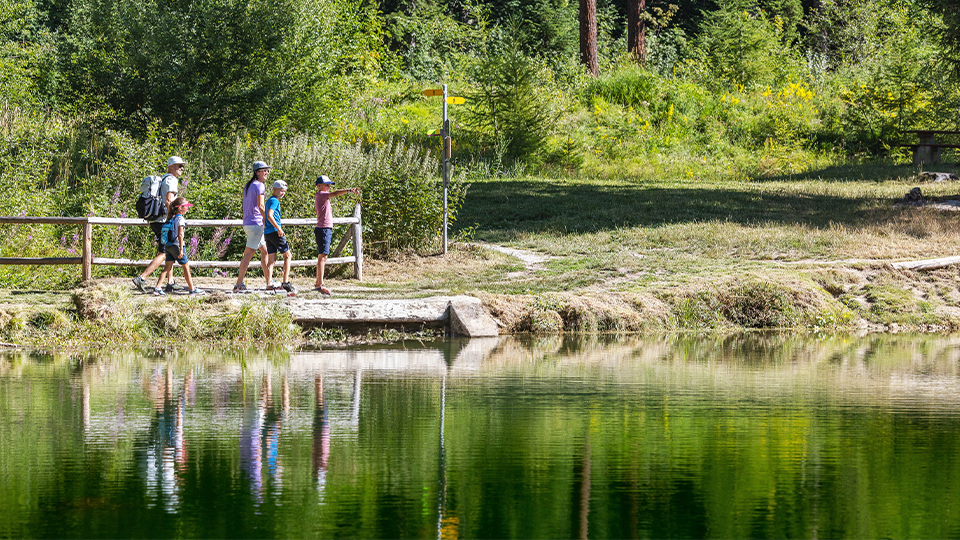
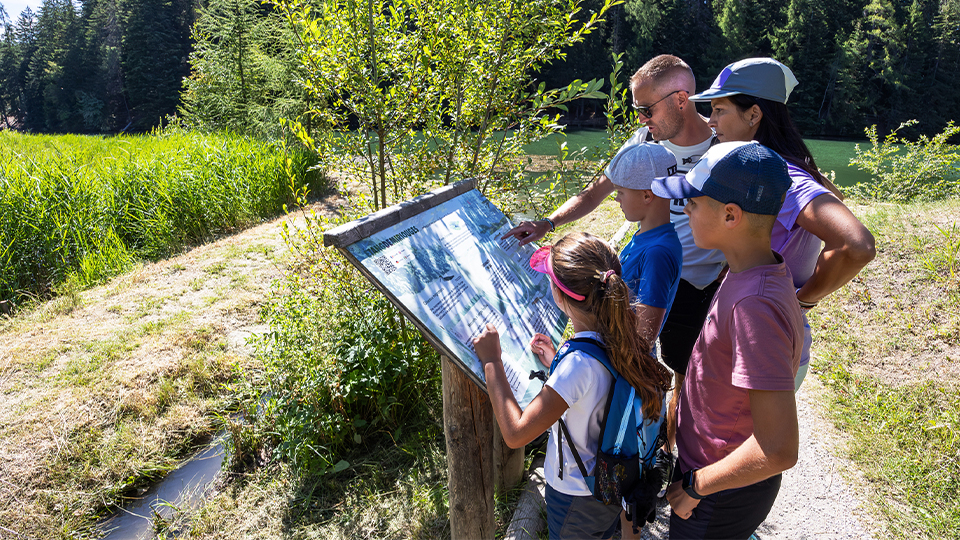
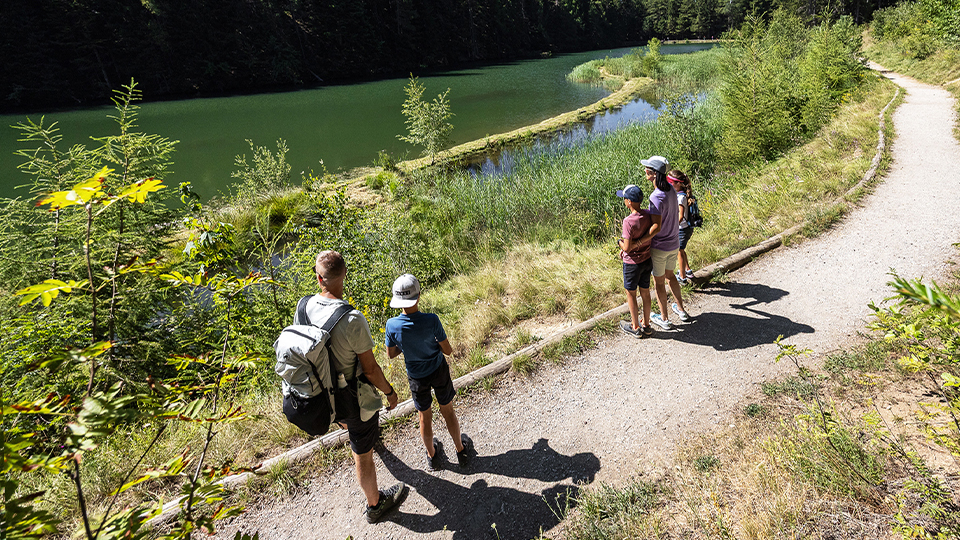
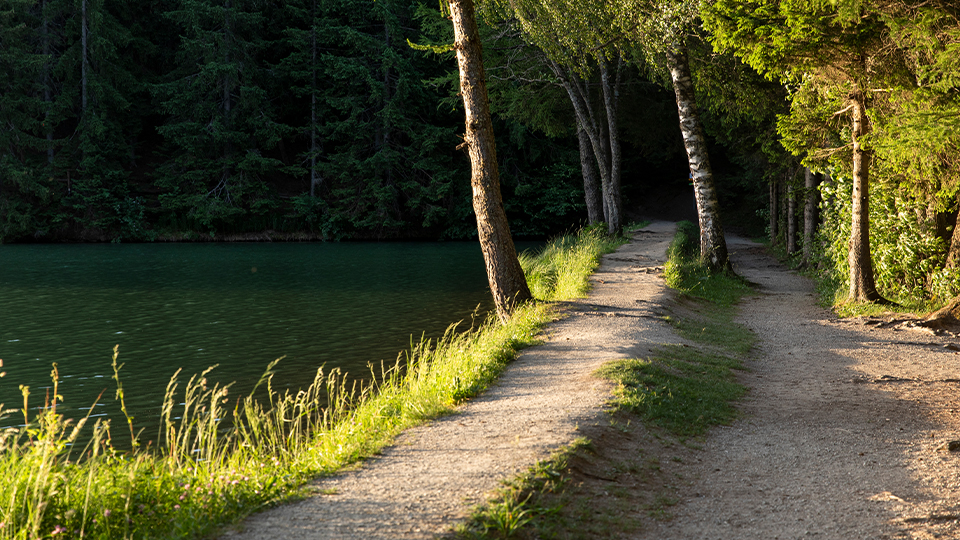
This site, designated as a nature conservation area, strikes a perfect balance between environmental preservation and public access, with officially approved paths that are even accessible for wheelchairs and pushchairs. You’ll leave this walk with a new understanding of Alpine life, and a desire to observe the details that make this unique biotope so rich. To explore other trails where you can enjoy these natural treasures and explore the surroundings of Crans-Montana, we invite you to check out our other hiking trails.


